History doesn’t have to
fill a long page.
A photograph to begin, a question and a short story. Let your curiosity guide your reading.
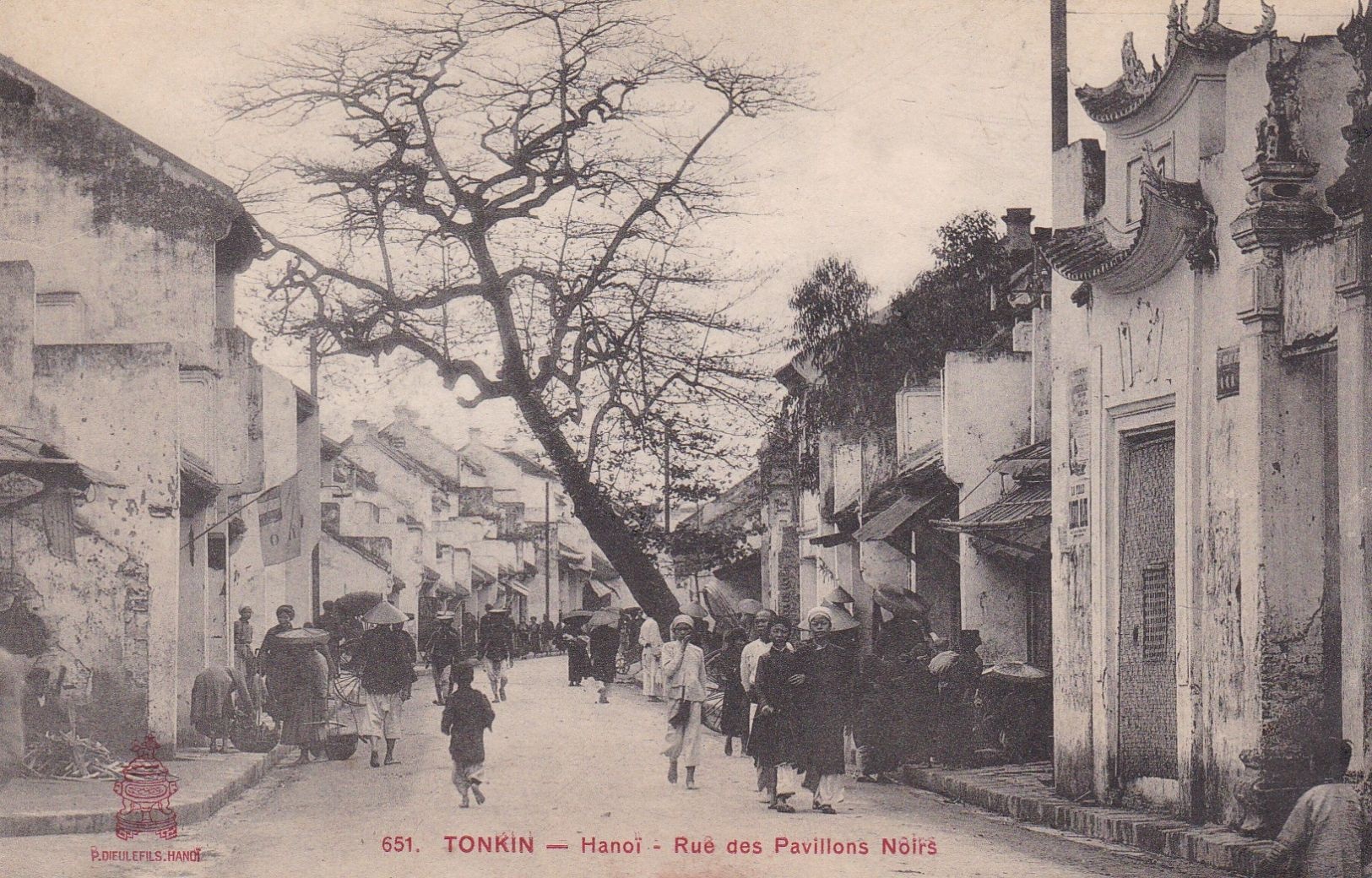
Three new perspectives on Hanoi.
01BENEATH THE CITYSecret Files: The Closed Doors Beneath Hanoi
From Hoa Lo’s sewer to D67 Bunker: two underground spaces and two stories of human endurance.
Read the full article ↗Close the article ↑
1. Introduction: The Hidden Side of Celebrated Heritage
1.1. Hanoi has more than a surface
Every day, thousands of people walk along busy Hai Ba Trung Street or beneath the old trees of the Thang Long Imperial Citadel. Yet few realise that beneath the roads and green lawns, Hanoi holds an entirely different underground world. Beyond the soaring roofs and elegant French architecture above ground are spaces heavy with the passage of time, where some of history’s most urgent struggles for survival took place.
1.2. Decoding two underground spaces
This story explores two strikingly different sides of underground Hanoi: a narrow, foul-smelling sewer that became a gateway to freedom at Hoa Lo Prison, and a fortified bunker nine metres below the Thang Long Imperial Citadel, where decisions shaping the country’s future were made.
2. Hoa Lo: An Extraordinary Escape Through a Sewer
2.1. The weakness in a formidable prison
At the end of the nineteenth century, the French colonial authorities turned Hoa Lo into a place remembered as a “hell on earth”, surrounded by four-metre walls topped with broken glass and exposed wires. Its architecture was considered so secure that “not even an ant could get through”. Yet the designers overlooked a crucial detail: the underground drainage system. The dark, arched sewer, built to carry waste, would eventually become a narrow opening towards freedom.
2.2. The historic escape of March 1945
History lives beyond the written record; it also survives in acts that pushed human endurance to its limits. In March 1945, more than one hundred political prisoners took part in an extraordinary escape. Inside a sewer measuring less than half a square metre, with stifling air and an overpowering smell, they removed iron bars and squeezed their shoulders and bodies through the narrow opening. It was more than a physical escape: it expressed an intense determination to survive and be free.
2.3. Experiencing the site today
Today, books are not the only way to approach that history. During a night tour at Hoa Lo, pause before the displayed sewer opening and close your eyes. The sound of chains and the cold presence of the stone walls can help visitors imagine the fear, as well as the extraordinary courage, of those who came before them.
3. Thang Long Imperial Citadel: D67 Bunker and the Protected Headquarters
3.1. A hidden world nine metres underground
In contrast to the quiet, timeworn surroundings of Kinh Thien Palace, D67 Bunker lies nine metres beneath the Imperial Citadel. Built in 1967, during some of the most intense years of wartime bombing, it was a remarkable feat of military engineering. Thick concrete walls and sealed steel doors were designed to resist bombs and radiation. For Hanoi’s residents at the time, this highly secret space was largely unknown.
3.2. A space that holds time still
Entering D67 today can feel like opening a time capsule. A red telephone used for military commands, maps covered with operational markings, and neatly arranged canvas folding chairs bring the past into focus. Without sunlight or street noise, the stillness invites visitors to imagine the people who once calculated each decisive move here.
3.3. Walking down into the bunker
Walking along the sloping corridors and hearing your footsteps echo against the cold concrete is a powerful visual and auditory experience. In the quiet, you may imagine the crackle of a radio or a softly spoken battlefield report from more than half a century ago.
4. A Double Perspective: Heritage and Survival
4.1. A revealing contrast
Hoa Lo and D67 offer a compelling double perspective on Hanoi’s underground heritage. At Hoa Lo, people sought a way out to reclaim their lives and individual freedom. At D67, military leaders deliberately went underground to help protect the survival of a nation. Two spaces with different purposes, both shaped by endurance and ingenuity.
4.2. Historical space and emotional experience
These places carry emotional weight through the physical traces that remain. Peeling brick walls at Hoa Lo and the austere steel doors of D67, fitted with wheel-shaped handles, make the past tangible. Their enclosed, shadowed corridors can create a sense of tension and mystery, inviting visitors to reflect on the harsh limits of survival in another era.
Conclusion
Heritage has never been only broken bricks or dusty museums. Opening the doors beneath the city reveals history at its most human: fear, courage, and an unbreakable will. Hanoi still holds these cultural layers, waiting for a new generation to step forward and decode them.
Written by the BTS team · Hanoi.exe
Further reading: Hoa Lo Prison Relic · D67 House and Bunker
Enter the experience ↗02LIVING HERITAGEWhere Time Meets: Hanoi’s Heritage in Contemporary Life
St Joseph’s Cathedral and Hoan Kiem Lake: century-old landmarks meet the rhythms of a younger generation.
Read the full article ↗Close the article ↑
1. Introduction: New Life for Architectural Heritage
1.1. Heritage within the modern city
Hanoi has a distinctive approach to preserving its historic buildings. Rather than turning heritage into enclosed display spaces, the city allows these places to accompany the rhythms of urban life. Old French architecture and quiet lakes remain connected to everyday experience, becoming public spaces where nostalgia meets the energy of the present.
1.2. Cultural change around familiar landmarks
St Joseph’s Cathedral and Hoan Kiem Lake are clear examples of this transformation. Beyond their roles as witnesses to history, these architectural spaces have become gathering points for communities and younger generations. This ongoing cultural change creates a lively urban landscape.
2. St Joseph’s Cathedral: Religious Architecture and Popular Culture
2.1. A Gothic landmark in the capital’s centre
In central Hanoi, St Joseph’s Cathedral expresses the language of Gothic architecture through soaring roofs and grey walls marked by time. The building provides a steady presence in the cityscape, preserving the dignity and calm associated with old Hanoi. Yet much of the area’s living energy comes from the trade and everyday activities unfolding just outside its doors.
2.2. Sacred space and everyday rhythms
The meeting of Eastern and Western cultures here appears in the habits of local residents. Young people gathering over glasses of pavement-side lemon tea have become a familiar sight. This animated foreground does not clash with the cathedral’s stillness; instead, it makes the setting feel closer to everyday life. Under the shadows of weathered grey walls, the boundary between a dignified monument and a busy urban meeting place grows less distinct. A new generation can spend time here and breathe alongside history.
3. Hoan Kiem Lake: A Cultural Space with Many Layers
3.1. Contrasting rhythms of day and night
A short walk from the cathedral, Hoan Kiem Lake offers different rhythms of daily life. In the early morning, the lake feels peaceful, with people exercising or enjoying coffee beneath old trees. At night, especially at weekends, the walking streets take on another character. Street performances and independent music turn the area into an energetic centre of cultural activity.
3.2. The city through younger eyes
Today’s Hoan Kiem Lake resembles an open chronicle, recording changes across generations. Younger people’s perspectives reach beyond nostalgia for the trams of the past. Photography, digital platforms, and personal style bring fresh ways of seeing. Heritage becomes an open setting for contemporary images and experiences, enriching the capital’s cultural life.
4. Conclusion: The Future of Living Heritage Spaces
St Joseph’s Cathedral and Hoan Kiem Lake demonstrate Hanoi’s heritage capacity to welcome and renew. Bringing historic spaces into contemporary cultural life allows the past to receive the breath of a new era. Whether stopping at a familiar café or sitting beside a heritage building, each person writes another line in the city’s cultural diary, where century-old values continue alongside the present.
Written by the BTS team · Hanoi.exe
Enter the experience ↗03KNOWLEDGE & GEN ZDecoding Van Mieu: An Ancient Centre of Learning Through Contemporary Eyes
Read the eighty-two doctoral steles as an archive of knowledge, and find yourself in the journey of earlier scholars.
Read the full article ↗Close the article ↑
1. Introduction: More Than a Place to Seek Good Fortune
1.1. Van Mieu in the minds of younger generations
As summer approaches and major examinations draw near, Van Mieu–Quoc Tu Giam welcomes people hoping for good luck. Many younger visitors see this historic place mainly as a spiritual stop during exam season. Yet looking only at incense and wishes for success overlooks a deeper meaning within the institution often described as Vietnam’s first university.
1.2. Rediscovering a centre of knowledge
Taking a step back from exam-season customs opens a different perspective on Van Mieu–Quoc Tu Giam. Beyond a sacred place for good fortune, it appears as a vast archive of knowledge, where the academic ambitions of past and present find common ground.
2. The Doctoral Steles: An Enduring Database in Stone
2.1. A lasting record on stone
Approaching the eighty-two doctoral steles with a contemporary mindset reveals more than finely carved monuments. They can also be understood as a substantial information database from the imperial era. Their inscriptions record the identities, home towns, and examination achievements of successful scholars. Carving these names into solid stone was an attempt to create a permanent record and make academic recognition visible to later generations.
2.2. The weight of personal responsibility
Being honoured on a stone stele was a source of pride and a lifelong commitment. The deeply carved Chinese characters remind us that knowledge comes with responsibility to history and society. Standing before these timeworn stones, contemporary visitors may reflect on recognition and authenticity in an age when information can be edited so easily.
3. The Desire for Knowledge: A Dialogue Between Past Scholars and Gen Z
3.1. Academic pressure across time
There is a striking psychological connection between generations separated by centuries. In the past, Confucian scholars brought their tents and camp beds to examination grounds, enduring sleepless nights under the pressure to succeed. Today, students face demanding examinations of their own: late-night deadlines, thousands of lines of statistical data, and complex financial reports or business strategies. Whether grinding ink to compose classical texts or typing computer code, the pressure of academic expectations remains real.
3.2. Inspiration through perseverance
Recognising this shared academic pressure changes how we engage with Van Mieu. Rather than visiting only to seek good fortune, young people can find stillness and inspiration in the perseverance of earlier generations. Around Khue Van Pavilion and Van Lake, one idea becomes clear: knowledge is not an effortless gift, but the result of sustained practice.
4. Conclusion: A New Understanding of an Ancient Symbol
Van Mieu–Quoc Tu Giam is more than a quiet museum of the past. It represents a continuing tradition of learning, honouring effort, accountability, and the ambition to reach new heights of knowledge. Decoding this heritage allows younger generations to enter its historic spaces with a new mindset: to see themselves within history’s long journey of perseverance, rather than simply asking for a miracle.
Written by the BTS team · Hanoi.exe
Further reading: Department of Cultural Heritage – Doctoral Steles
Enter the experience ↗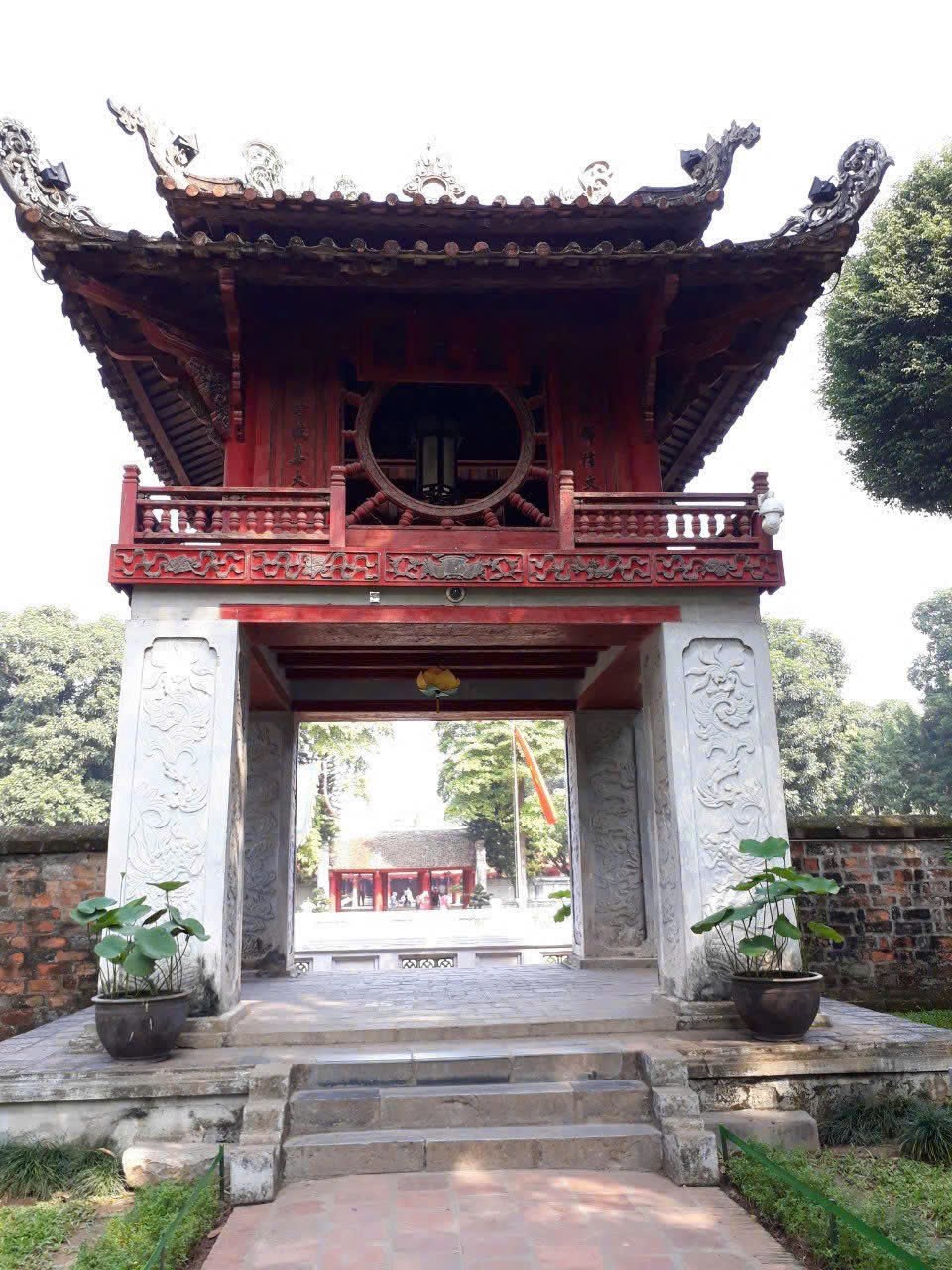
1070 or 1076? Two dates, two stories.
The Temple of Literature and the Imperial Academy are often mentioned together, but their founding dates are different.
Read the story
The Temple of Literature was built in 1070 under Emperor Ly Thanh Tong. The Imperial Academy was founded in 1076. These two dates reveal two layers of the site’s story: a place honouring sages and a tradition of educating talented scholars.
Look at the main gate and notice how the entrances are arranged around a central axis. A photograph cannot tell the whole history, but it can make you want to turn the next page.
Before the prison, Hoa Lo was the name of a craft village.
A familiar name can preserve traces of the city from before a building existed.
Read the story
According to the site’s historical materials, Phu Khanh village was known for making earthenware household items such as pots, kettles and stoves. Its traditional name was Hoa Lo. French colonial authorities began building the prison on the village’s land in 1896.
When you look at the Maison Centrale gate, consider the earlier layer of history that it replaced. Exploring heritage starts with questions and continues with reading about the people who lived in that space.
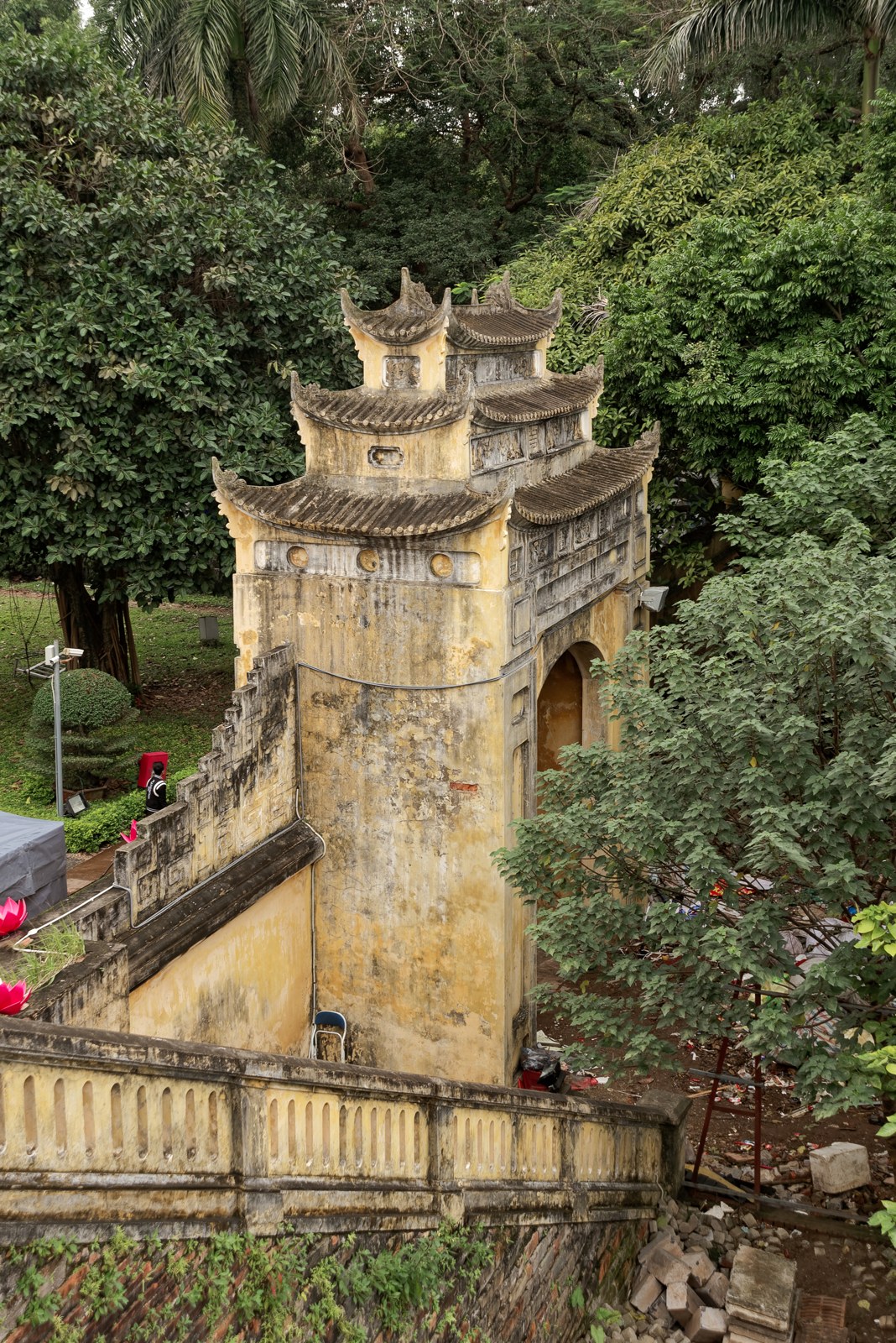
Doan Mon: one gateway, many layers of time.
Some places are best understood as part of a wider whole, beyond a single photograph.
Read the story
The Central Sector of the Imperial Citadel of Thang Long became a UNESCO World Heritage Site in 2010. Its significance lies in the long continuity of this centre of power and the layers of cultural evidence preserved here.
A photo of Doan Mon Gate is a starting point for understanding the citadel. Let its forms lead your curiosity towards the wider site, archaeological remains and heritage records.
Source: UNESCO World Heritage Centre ↗
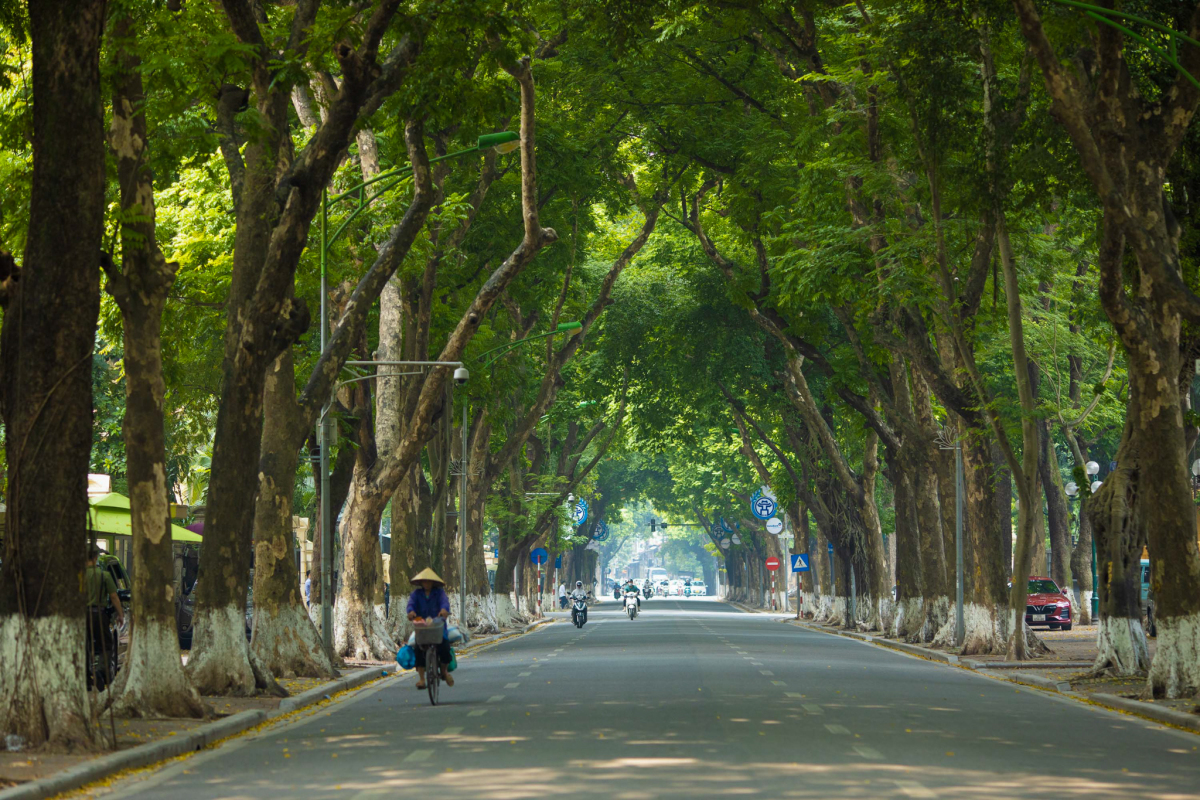
Read architecture through small details.
A window, a pattern or an axis of symmetry can open up a different view of the city.
Read the story
Begin with three questions: which materials stand out, which details repeat, and where does the light lead your eye? In this photo of Phan Dinh Phung Street, notice the rhythm of the tree trunks, the light between the canopies and the lines leading along the street. Choose a detail that gives the scene depth.
This is an observation exercise from Hanoi.exe. Your feelings do not need a “correct answer”: the key is to distinguish what you can see in a photo from historical facts that need verification.
Source: Vietnam Tourism ↗
Memories live in the details.
Red beside the lake, weathered walls, columns across a facade. Choose a photograph and finish this sentence: “To me, Hanoi is…”
The “Time Slip — Then & Now” series is in preparation, using sourced archival photos of matching locations with clearly identified dates.
Photo sources & licences
Photos are resized for faster loading and may be cropped to fit the layout. Capture dates follow the source; upload dates are not used as capture dates.
- Ma May Street in old Hanoi — Pierre Dieulefils · Captured: circa 1900 · Public domain
- Khue Van Cac Pavilion — Sai Gon Dep Lam · Captured: 1 October 2024 · CC BY 4.0
- A side view of Doan Mon Gate — Jakub Hałun · Captured: 23 January 2024, 10:36:57 · CC BY 4.0
- Phan Dinh Phung Street, Hanoi — Vũ Ngọc Thiện · Captured: 14/09/2022 · CC BY-SA 4.0